
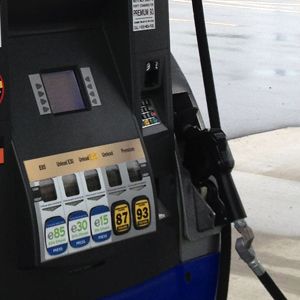
An Illinois law went into effect on May 1 allowing all gas stations to sell E15 year-round. As a result, you will start seeing E15 fuel on blender pumps, and you will need to be aware of it. There are often no warnings for motorcycles on these pumps. My local ABATE was able to get labeling that indicates these fuels are not safe for motorcycles; it is supposed to be a yellow sticker on the pump. I am sure other states will follow, if they have not already started allowing this. The issue has also been brought to the attention of the MRF, and I am hopeful they will push for action at the national level to help address it.
The last time I was at a Buc-ee’s, they had E15 on separate pumps, and that is fine—as long as there are E10 (or, even better, E0) pumps that motorcycles can use that are not connected to E15 at all. Below is an article I wrote about E15 and blender pumps, and why this is a concern.
There has been a movement in some states against blender pumps—or at least to ensure that if a station uses blender pumps that dispense E15, it also has a dedicated pump for E10 (or lower ethanol blends). You may wonder why. Let’s start by explaining what a blender pump is.
A blender pump is a gas pump that dispenses multiple grades of fuel using the same hose and nozzle for all options. The issue is that the hose and nozzle can hold up to about 4 gallons of fuel between customers. So, if someone fills up with 89-octane fuel and then you pull up next, even if you select 91 octane, you could get up to 4 gallons of 89 octane before the 91-octane fuel reaches the nozzle. Even though this is a rip-off for all motorists, it creates a bigger problem for motorcyclists—who often buy only a few gallons at a time—when blender pumps are used to dispense both E10 and E15 ethanol blends through the same hose and nozzle. You may wonder why that is a big deal, so let me explain a bit about E15 and its relationship to motorcycles.
E10 is 10% ethanol and 90% gasoline. E15 is 15% ethanol and 85% gasoline. So what are some of the issues with ethanol?
- Ethanol blended with gasoline tends to attract more moisture than gasoline alone, which can contribute to phase separation if the fuel sits for too long. In that case, the ethanol and water can separate from the gasoline. Many motorcycles draw fuel from the bottom of the tank, which can increase the chance of water reaching the engine first after the bike has been sitting.
- When the fuel is correctly mixed, higher ethanol blends can burn differently than straight gasoline and may change operating temperatures depending on the engine and tune. Some high-ethanol race fuels burn with a blue or nearly invisible flame. In practical terms, ethanol blends can affect how hot an engine runs, which can increase rider discomfort—especially in heavy traffic.
- Some plastic, rubber, and composite components in fuel systems can be more sensitive to higher ethanol blends, which may contribute to swelling, drying, cracking, or premature wear over time.
- Many motorcycles are not approved to use fuel with more than 10% ethanol. Using E15 may go against manufacturer recommendations and could void your warranty.
- According to the EPA, E15 is not approved for use in motorcycles. Using fuel that is not approved for your vehicle can also create regulatory and liability issues.
With blender pumps, it is possible to accidentally end up with a higher-ethanol blend than you intended—especially if E10 and E15 are dispensed through the same hose and nozzle. That can risk damage to your motorcycle and may void your warranty. It is important to support efforts in your local area to restrict or regulate blender pumps so riders always have access to E10 or lower-ethanol fuels that are safe for motorcycles.