
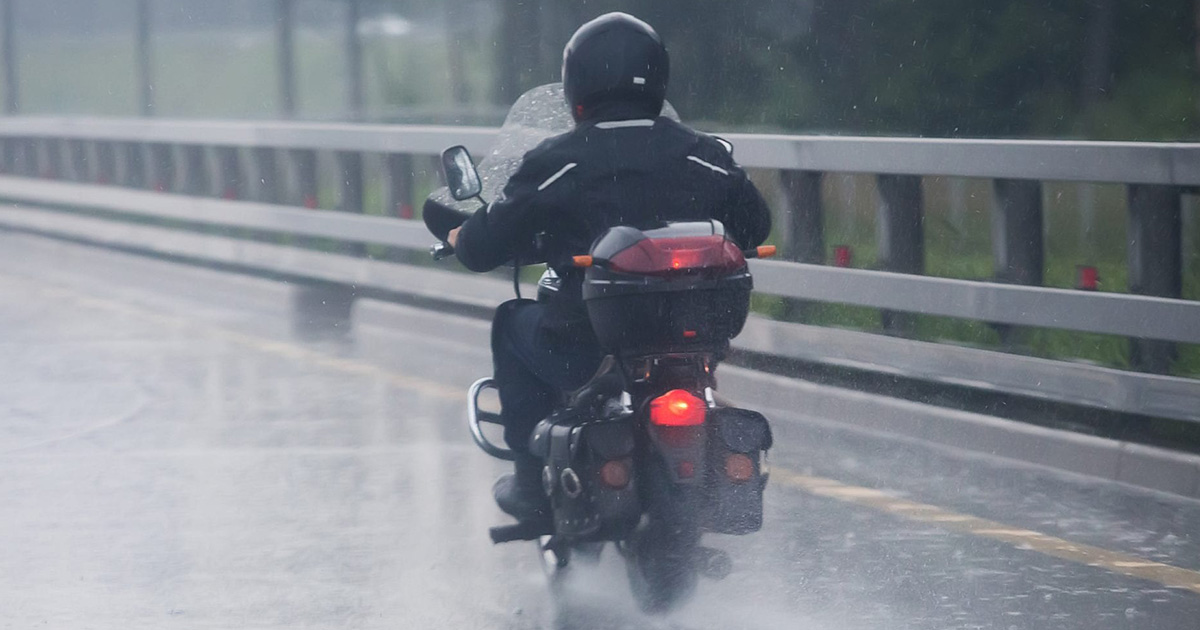
If you’re wearing what’s behind me, you’re already at risk. Let’s talk about riding in the rain. And we’re starting with the mistake. Most writers don’t even realize they’re making what you are wearing because of the rain. Your gear isn’t about comfort. It’s about control. If you’re soaked, cold, and distracted, you’re ready behind before anything even happens. Here’s the bigger issue.
Visibility. According to the Federal Highway Administration, nearly 75% of weather related crashes happen on wet roads, and reduced visibility is a major factor. So if you’re riding in dark gear in the rain, you’re stacked the odds against yourself. You need high visibility colors or reflective elements, especially on your chest, back and helmet. You want drivers to pick you up through spray and low light.
Now let’s talk about waterproofing because this is where people cut corners I know I have in the past. Water resistant is not waterproof. Water resistant gear will soak through, and once that happens, your focus drops, your reaction time slows, and your ride gets sloppy. You want a fully waterproof outer layer, something that keeps you dry. Not just delays getting wet.
Gloves. They matter more than people think. Wet hands on smooth grips. That’s a loss of control waiting to happen. Use waterproof gloves with grip texture. If your hands are slipping, your throttle control is gone and your boots. If your feet slide when you stop or shift, you’re unstable before you even move again. Use over the ankle waterproof boots with a solid tread. Bottom line if your gear doesn’t keep your dry, visible and in control, you’re not prepared for rain riding. And that’s before the road even becomes a factor.
Okay, we’ve talked about waterproof gear. Now that that’s handled, let’s talk about how you actually ride in the rain, because this is where most riders get it wrong when the road gets wet. You can lose 30 to 50% of your traction. That’s not just a small adjustment. That’s a completely different riding environment. And according to the National Highway Traffic Safety Administration, about 70% of weather related crashes happen on wet pavement, not heavy rain. So the danger is an obvious. That’s why it catches people. Everything you do on the bike needs to be smoother. Your throttle needs to be smooth, your brakes need to be progressive, and your steering needs to be controlled.
If you make sudden inputs, you’re asking your tires to do more than the availability of traction allows. And in the rain, once traction breaks, it’s harder to recover stopping distance. It can increase by 40% more in wet conditions. So if you’re following at your normal distance, you’re really too close. Give yourself more space. More time. More margin. How you corner changes as well. Slow down before you turn. Reduce your your lean angle and stay relaxed. Tension leads to overcorrection and overcorrection in low traction is how riders go down. Rain riding isn’t about being cautious, its about being precise. Smooth inputs, deliberate control and respect for reduced traction. That’s what keeps you upright.
All right. Moving on to road awareness. And this is what actually takes riders out. Let’s talk about the road because this is where most crashes usually happen. The most dangerous time to ride. It’s the first bout 10 to 20 minutes after the rain starts. That’s when the oil, fuel residue, and debris rise to the surface. Traction drops fast, and most riders haven’t adjusted yet.
And here’s something most people underestimate. It’s not just about what you can see. It’s about who can see you. Rain spray. Low light. Drivers are far less likely to notice a motorcycle. They don’t notice us when it’s sunny out. So you need to ride like you’re invisible. Which we should ride like we’re invisible anyways. Because people in cars just don’t notice us.
Position yourself where you can be seen. Increase your following distance and don’t assume drivers are aware of you. This really is our everyday riding. Now look at the surface itself. The painted lines. There’s manhole covers. Guess what? They’re slippery too. And metal plates. They’re even worse in dry conditions. You sometimes barely notice them. I have short leg syndrome, so I tend to notice them even in dry conditions. In the rain, they can take your tire out instantly.
So avoid them when you can. And if you can’t cross them upright with no sudden inputs, here’s the reality. Most rain crashes don’t happen because riders don’t know how to ride. They happen because riders don’t adjust. Less traction. Longer stopping distance, lower visibility, and unpredictable surfaces. If you respect that, you’ll stay in control. If you don’t, you’re relying on luck.
And luck does run out.